You can get ahead of the curve on the hottest new home design trends by checking out our predictions of which features and design elements will be trending in 2024.
We looked at nearly 300 home features and design styles mentioned in for-sale listing descriptions on Zillow and then identified the keywords showing up more frequently than they did a year ago. From post-pandemic pastimes to nostalgic designs from decades past, Zillow identified the emerging trends of 2024:
Houses are getting bigger overall, but that doesn’t mean a larger house is right for you.
“Fit is super important, and people get complacent and they don’t think about if their home is still fitting them,” says Marni Jameson Carey, a home and lifestyle expert, author of “Downsizing the Family Home: What to Save, What to Let Go,” and president of Power to the Patients, a nonprofit organization.
Here are four signs your home may be bigger than you need or can handle.
There are rooms you haven’t spent time in for weeks.
You haven’t furnished the whole house.
The property taxes are too much for you.
Most of the stuff belongs to people who’ve moved away.
And here are four things you can do about it:
Reach out to a professional.
Stay in a short-term rental for a while.
Consider all your needs.
Don’t just downsize your home.
There Are Rooms You Haven’t Spent Time in for Weeks
A four-bedroom McMansion may have once been perfect for a house full of teenagers and hosting extended family for the holidays, but now all but your own bedroom is a guest room and you no longer host Thanksgiving for the family.
“You’re overheating spaces that don’t need to be heated at all because you’re not using them,” says Eric Stewart, CEO and associate broker of the Eric Stewart Group of Long & Foster Real Estate in the District of Columbia metro area. “I think it’s the slow realization that the house owns you more than you own the house.”
You Haven’t Furnished the Whole House
Whether you don’t need a room or can’t afford to put furniture in it yet, the fact that your furniture choices can’t match the house you bought may be a sign it’s not the right real estate fit.
“Plastic chairs on a patio on an $800,000 house, and you go, ‘What happened here?’” Carey says.
If you’ve lived in the house more than a few months and you’ve left entire rooms bare, ask if you’re ever going to take full advantage of the total square footage you own. If you see it as unlikely, consider “right-sizing” your property to fit with your lifestyle as well as your wallet.
The Property Taxes Are Too Much for You
You can deduct your state and local property taxes up to $10,000 from your itemized federal tax filing, but for many homeowners that still means they’ve got a few thousand dollars to pay without annual relief.
If the limit on property deductions isn’t enough and means you’re financially strapped, you should rethink the home you own. Consider whether the location outweighs your ability to pay other expenses, and look at alternative cities or neighborhoods that might be able to provide the life you desire without the excessive costs currently tied to it.
Most of the Stuff Belongs to People Who’ve Moved Away
A classic empty nester problem is having all your kids’ belongings spanning from birth to college – and even beyond – with no real use for any of it. Trying to get your adult children to decide between keeping their macaroni art from first grade at their own house and letting you toss it can be tough for both sides, but keep in mind that your home shouldn’t be used as a storage unit.
Carey says, when given a certain amount of space, most people will naturally fill it up with belongings. In the case of empty nesters, that space is often filled with memorabilia that ultimately does not provide enough sentimental value to anyone to be kept. Put your foot down and have your kids come by to clean up and take what they would like to keep.
Even if you’d like to stay in your home in the long run, it’s important to regain control of the property when others stop living there. The worst-case scenario is realizing you need a smaller house or need to move to where you can get more care but feel overwhelmed by the task of clearing out the house. “Don’t be there as a default – be there by choice,” Carey says.
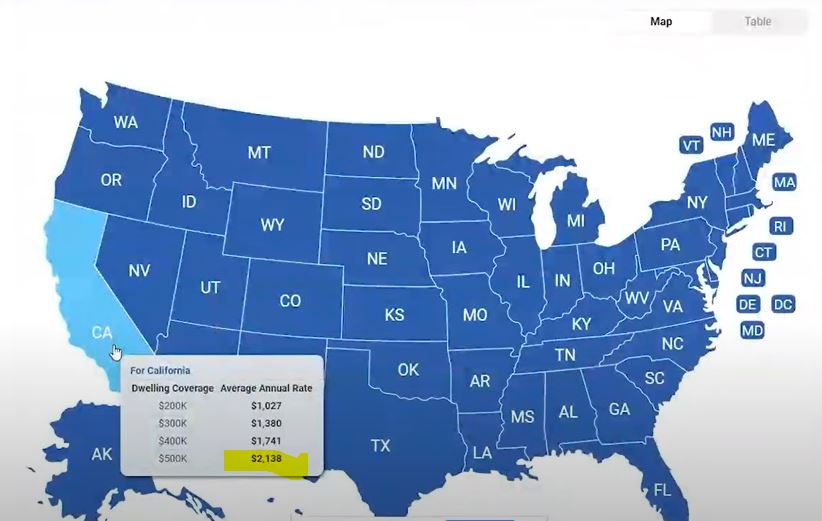
Currently buyers are having to pay 2x or 3x the previous bill for homeowners insurance, due to the lack of options because the big insurance companies have stopped writing policies in California. Some are blaming climate change, and guys like Carl Demaio are blaming Biden, but with a little digging it looks like the insurance-companies requests to raise premiums have been stalled for years. California’s average home insurance rate is $1,225 per year for $250,000 in dwelling coverage is about 14% lower than the US average, according to Bankrate. The thought of insurance premiums being 30% higher sure sounds better than 2x or 3x!
Full story from the LAT:
After a summer that saw many of California’s top home insurers pull back from the state market, Insurance Commissioner Ricardo Lara announced Thursday that he struck a deal with the insurance industry to encourage new coverage in the state.
Insurers, Lara said, agreed to return to the high-risk fire zones in the state in exchange for a number of concessions that will make it easier, in theory, for them to get higher rate increases through the state regulator more quickly. The announcement comes the week after negotiations in Sacramento over a legislative response to the home insurance market fell apart.
Gov. Gavin Newsom also issued an executive order on Thursday afternoon commanding the insurance commissioner to “take prompt regulatory action to strengthen and stabilize California’s marketplace” and consider whether emergency action could be necessary.
The changes are slated to go into effect by the end of 2024, but the hope is that insurers will return to writing new homeowners policies in California sooner. Leading insurers such as State Farm, USAA and Allstate all have requests for rate increases pending with the state insurance department, and are requesting hikes of 28.1 percent, 30.6 percent and 39.6 percent, respectively.
If approved, each company would be allowed to raise its total premiums in the state by that amount, but the rate increase can be distributed differently among homeowners: a cabin in the woods might see a 200 percent jump while a home in San Francisco could see little to no change.
Many who own a two-story home wonder if there is a reasonably-priced elevator they can install once their knees start to give out. This is the best value I’ve seen, though I still recommend moving instead!
Many Americans will save thousands of dollars on home renovations when new rebates for a range of energy-efficient upgrades kick in later this year.
Buyers will receive the rebates as part of a $9 billion federal program passed by Congress in last summer’s Inflation Reduction Act. Household savings can range from hundreds of dollars for single items such as an electric cooktop or dryer to $8,000 for a heat pump or cutting home energy use by 35% or more. Those planning such projects may want to hold off until the program begins.
The size of the rebates will vary based on your household income and where you live, since the program will be administered separately by each state.
States will announce the particulars in coming months, based on guidelines issued by the Energy Department in July. These rebates can also be stacked on top of existing tax credits and utility offers for heat pumps, solar and EVs, said Kara Saul-Rinaldi, a clean-energy policy strategist in Washington, D.C. The new rebate programs and enhanced tax credits are good through 2032.
Tax credits for greening your house are available now. Tax savings for a home energy audit: up to $150.
Install rooftop solar and add battery storage to create your own power plant. Tax savings: 30% of the cost of the system. Add insulation and/or more energy-efficient windows and doors. Tax savings: up to $1,200. Replace an old air conditioner and a gas furnace with an electric heat pump that does double duty, heating and cooling. Tax savings: up to $2,000. Drive an electric vehicle and install a home charging station. Tax savings: Up to $7,500 for a new vehicle, up to $4,000 for a used vehicle, and up to $1,000 for the charger. Income limits apply.
Every coastal home has termite damage, and every seller would be smart to identify the cost before selling. There is usually a wide varance in costs quoted – we use our qualified vendors who don’t charge a premium rate and let our volume work for you. Here the cost was $8,345 for wood repair all around and fumigation:
The thought of buying a home that is truly move-in ready would be a natural fit for today’s home buyers. Our staging company is willing to sell everything they use to decorate our listings!
Developers frequently stage properties, giving potential buyers insight into what living there might actually be like. But these days, the trend is toward selling residences fully furnished, right down to the Frette sheets and Lavazza espresso maker. For well-heeled clients, these “instant homes” offer the ultimate in convenience, with the added caché of a big-name designer.
The neighborhood we’re in this weekend was built in the late-1970s, during the Rampart General days. The company used to pour concrete panels at the factory, and then assemble the fireplace/chimney on a wooden frame and then truck them to the homesites.
They got a bad rap because the chimneys were made of wood, which makes people think they are defective and one fire will cause the house to burn down. Here’s a local expert talking about them a few years ago:
The Big Three have all left. Hat tip to Richard for sending this in:
Farmers Insurance has limited new homeowners insurance policies in California, joining other major national insurance providers.
Farmers, the second-largest provider of homeowners insurance in the state, said it placed the cap on the number of policies in California effective July 3. The company cited high costs and wildfire risks.
“With record-breaking inflation, severe weather events, and reconstruction costs continuing to climb, we are focused on serving our customers while effectively managing our business,” Farmers Insurance said in a statement, adding it will limit the new policies “to a level consistent with the volume we projected to write each month before recent market changes.”
It’s getting harder and harder to find homeowners insurance in the states that are the most vulnerable to the effects of climate change.
Farmers’ shift follows decisions by State Farm and Allstate, two of America’s largest insurers. The companies said they will no longer write new homeowners policies in the state. Both cited wildfire risk as a reason for the move and blamed limits placed on insurance premiums in states like California. Insurance companies also say rising costs for labor and building costs make replacing homes costly.
“The cost to insure new home customers in California is far higher than the price they would pay for policies due to wildfires, higher costs for repairing homes, and higher reinsurance premiums,” said a statement from Allstate explaining its decision to stop writing new policies last fall.
Like with the 3% mortgages, those who are already in the club are the fortunate ones. Hopefully they can count on the Big Three insurers continuing to cover them at a reasonable cost. There will always be insurance available, thanks to theCalifornia Fair Plan, which was established in 1968. If/when it becomes insolvent, the taxpayers will probably provide support.
From now on, home buyers will be paying double or triple what previous buyers paid for insurance, but they are paying double or triple for the homes too, so it shouldn’t be a big deal. Living here is worth it!
Plus, the 40% of buyers who pay cash for their new home can always self-insure.