I had another case where the sellers had inherited the property, and their realtor thought they would be exempt from having to disclose. But all the law states is that they don’t have to use our form:
Under California Law, whether or not a seller is exempt from providing a Real Estate Transfer Disclosure Statement (“TDS”) based on Civil Code Section 1102 and the Seller Property Questionnaire (“SPQ”) pursuant to the Purchase Agreement, they are nonetheless required to make full disclosure of any known defects or material issues that may influence the Buyer’s decision to purchase the property or the price they are willing to pay in other words would the information impact the value or desirability in the eyes of the buyer.
The obligation to disclose known material defects or matters impacting the value or use of the property would apply to all exempt transactions such as Real Estate Owned (“REO”), Bankruptcy, Probate, Trust Sales and the like. Such disclosures may be made on the SPQ or a word document, the key is disclose, disclose, disclose! As licensees, we are also obligated to disclose regardless of any seller exemptions.
Make it easy on yourself – just use our disclosure form for all transactions.
New listings, new pendings, and more showings are happening everywhere. Regardless of what you think about it, there are people who are proceeding with their plans to buy and sell homes.
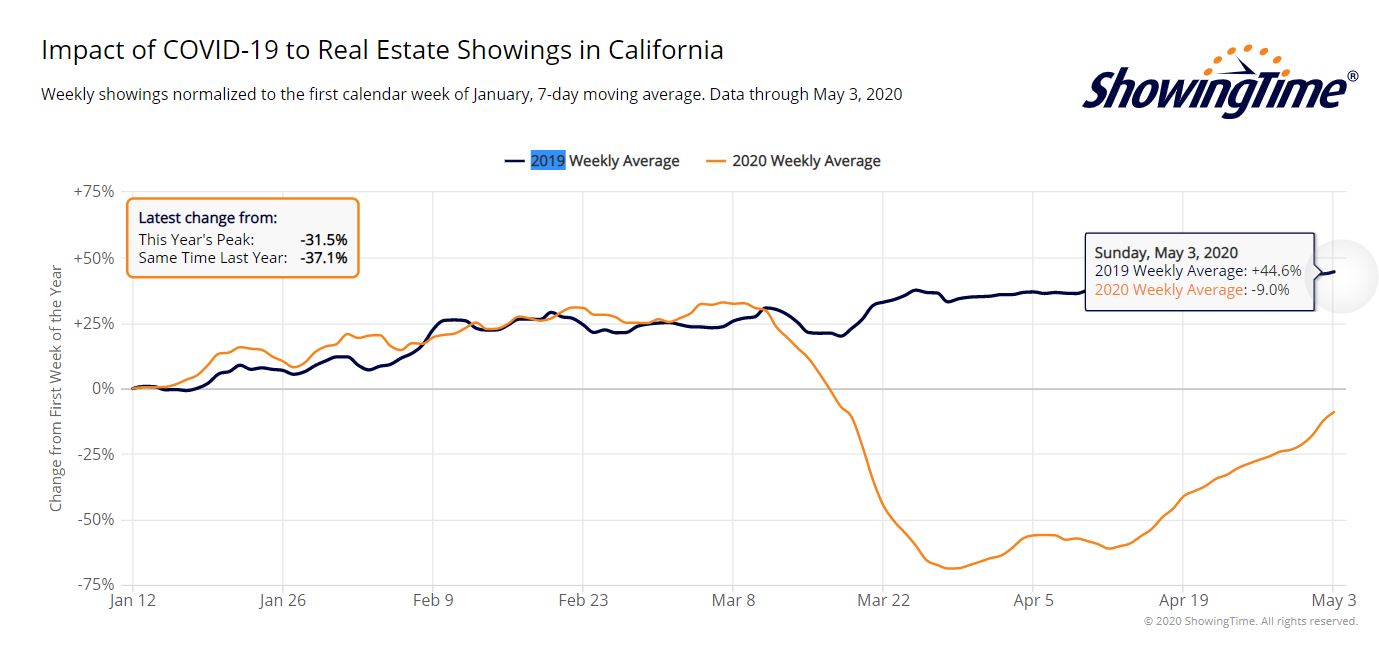
The industry is cautious, and you see it in the showing instructions. I haven’t seen a listing agent who wants to take your temperature (yet), but other demands are increasing. The basics include signing a Coronavirus disclosure, plus wearing gloves, mask, and shoe coverings to see a home. Some are taking the opportunity to load up, and insist that buyers furnish their loan approval and proof of funds just to SEE the home.
At least we are screening! Not sure if it will encourage or discourage buyers though.
Next will be the happy talk. The California Association of Realtors got started here with a heartfelt message that doesn’t flat out tell you to go buy a house yet, but you can feel it coming:
Are there buyers out there? Retail buyers?
This home listed on Friday, and already has 22 offers!
Hopefully there will be a vaccine, and/or testing for all at some point. It would be great if we had proof of wellness on our phone! But in the meantime, the market is forming.
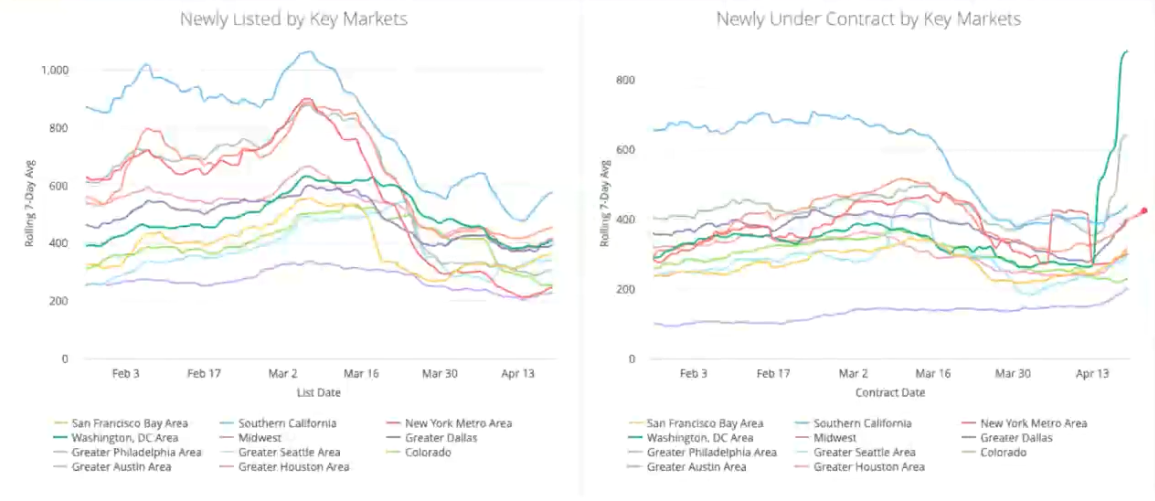
This is the Compass action across the country – the new pendings are out-pacing the new listings:
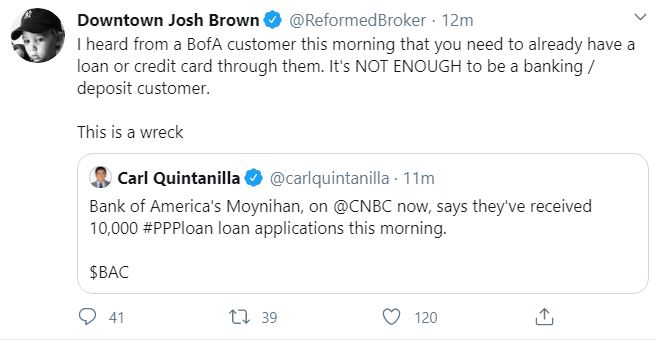
We noted last week how the jumbo mortgage market is back-pedaling in two ways. Banks stopped funding jumbo loans with 10% down payments, and the program that qualified the self-employed borrowers by using their last 24 monthly bank statements was also terminated.
The actual impact is hard to gauge, but we can say the buyer pool is quite a bit smaller today than it was a month ago….and those loan programs won’t be coming back anytime soon.
For the remaining buyers left in the hunt, won’t they have their way when negotiating. How many other buyers are competing to buy that house? Any?
Doesn’t that mean the sellers have to come down off their price? Shouldn’t there be a correction?
The reason that sellers hold out for their price is because they have other options. They have plenty of equity so they can get additional financing if they need money, instead of moving. They can also rent their house for a ridiculous amount if they don’t need to tap their home’s equity. The majority of sellers need to leave town to make the move worth it, so there is a natural reluctance to give up the familiar – unless they get their price.
Today we hear agents say they don’t know when the market will come back.
Let’s identify which market. They don’t know when the sellers’ market will come back.
It’s going to be a buyer’s market for the next 2-4 months, and the vast majority of agents have never seen a buyers’ market, let alone know how to navigate it. Over the last ten years, listing agents have gotten away with doing little or nothing to accommodate the buyers – their mantra has been, “hey, if you don’t like it, then cancel and we’ll get someone else”. But will there be any other buyers today? If so, at what price?
Buyers might get talked into escrow at a price close enough to list to make the sellers happy, but getting them to the finish line will be a major challenge today.
Here are my tips for sellers in a buyers’ market:
Get a pre-listing inspection, and fix as many issues as possible before going on the market.
Have specific quotes available for other issues that aren’t fixed yet.
In spite of furnishing this data to the buyers, expect that they will want to re-negotiate.
Build a defense in advance.
You may still need to do a little something for them to get the deal done, but at least being prepared will keep it to a minimum.
Wells Fargo is ‘suspending’ their jumbo-loan funding of all correspondents today, and the others (like Chase) are sure to follow. It’s one thing to stop funding loans for mortgage brokers, but to shut down the credit lines to the big players like Loan Depot, Quicken, and Guaranteed Rate is going to effectively end the jumbo-loan market as we know it.
Expect that this will become the industry trend, and blamed on the corona.
But the root cause is the industry contraction that has been going on for a couple of years now as sales decline and there isn’t enough business to go around.
The result?
Wells Fargo will still be funding jumbo loans. You’ll just have to get them directly from Wells Fargo.
You’ll be able to purchase the best homes for sale. You’ll just have to buy them from the listing agent.
The Clear Cooperation Policy is still scheduled to begin on May 1st, and listing agents will either have to input their listings directly onto the MLS within 24 hours of any public advertising, or sell them in-house.
In a desperate, fearful environment, take a guess at which will be the favorite.
We can predict how the real estate market will behave as this country gets a grip on handling the coronavirus (we’re not close yet). During the last crisis, the first buyers to jump in were those who weren’t concerned about timing the market, they just needed a house – and the 2013 market exploded well before the data said it should have.
The first-timers will be fueled with down payments from parents or grandparents, and with very few comps available to the contrary, they will just pay the seller’s price to get ‘er done this summer. It is certain that the corona fright will be the latest reason to hurry up and hunker down in a better home, and if the Fed can goose the MBS market and keep mortgage rates in the mid-3s, the market will come out fast. If rates are in the mid-4s, then it will be a slower ascent.
Broker management will encourage agents to keep those hot new listings in-house. Listing agents will want to be a hero within the office and get acknowledged at the next sales meeting for selling off-market. Office Exclusives will be sold to sellers as a price-discovery device, but when a few agents in the office want to give their waiting buyers an early preview, sellers will oblige. Surprise – we have an offer! The next thing you know we have a deal – and the sellers are grateful that they didn’t have to be bothered with open house or strangers prancing through with little or no notice.
Civility, and fiduciary, in our society was crushed by the quote in the movie Wall Street.
‘Greed is Good’.
Expect it to be on full display once the corona is over. Or sooner:
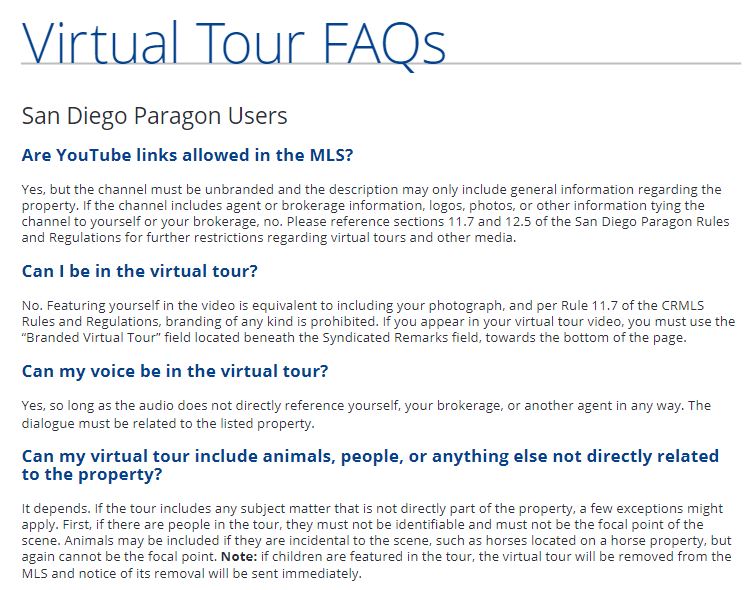
One of the most insane MLS rules prevents agents from including videos in the remarks. The MLS police is afraid that agents will slip in their contact information, and buyers will rush to purchase direct from the listing agent – but they can do that anyway. How hard is it to find a listing agent’s phone number in 2020?
Our MLS is temporarily allowing virtual tours and virtual open houses, but let’s hope it will be a permanent change. The real estate world is well on the way to eliminating the buyer-agents that provide no value, and those that give good advice don’t have to worry about losing a client to a video message.
In addition, allowing video tours in the remarks would cause more agents to do them!
You better be an all-around expert at fixing stuff in this environment – and be able to present a reasonable case to the buyers that’s easy to digest. We’re not out of the woods yet, but this video kept a situation from turning into a problem:
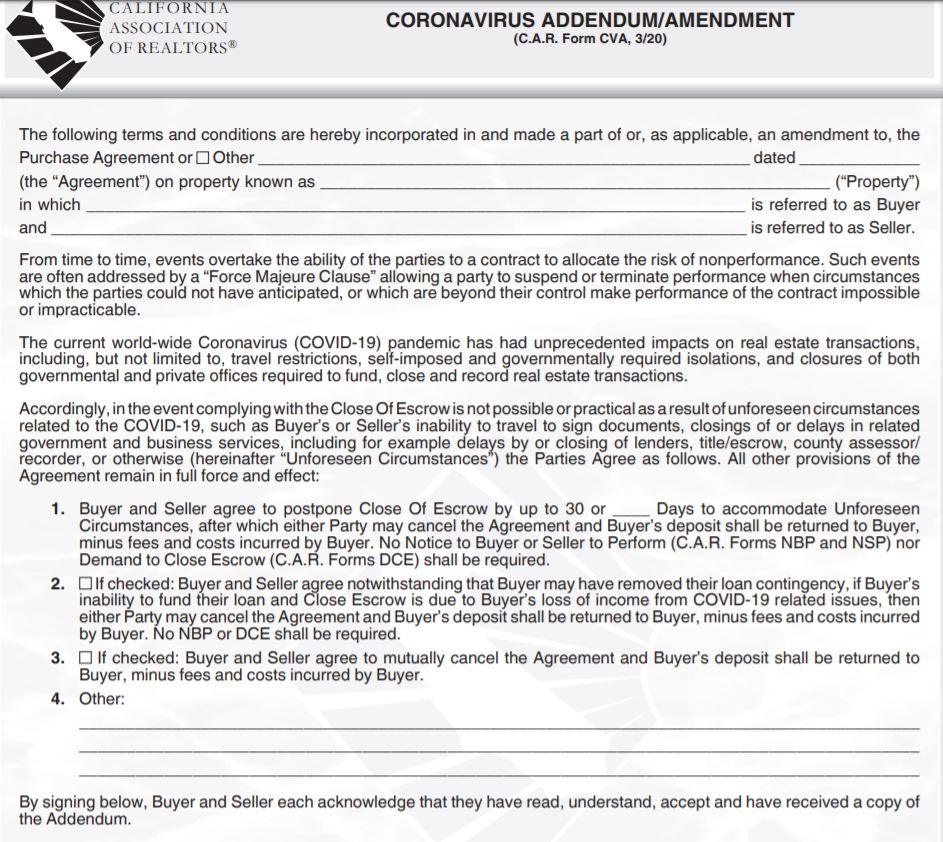
The California Association of Realtors published their coronavirus addendum/amendment today.
Those with an existing contract aren’t obligated to sign it, but they mentioned the ‘Force Majeure Clause’, which is a common clause in contracts that essentially frees both parties from liability or obligation when an extraordinary event or circumstance beyond the control of the parties, such as a war, strike, riot, crime, plague, or an event described by the legal term act of God(hurricane, flood, earthquake, volcanic eruption, etc.), prevents one or both parties from fulfilling their obligations under the contract.
I did whip through our standard contract, but didn’t find the words “force majeure” anywhere in the text, but it is probably in the Civil Code. In practice, most force majeure clauses do not excuse a party’s non-performance entirely, but only suspend it for the duration of the force majeure.
The CAR form suggests a 30-day extension, but whatever works for you. If the good-faith deposit is at risk, they are asking the sellers nicely to give it back to the buyers if they can’t qualify due to COVID-19 issues.
Glad to see the NAR promoting this point – considering what other agents think of you:
David Weldon empathized with his client’s growing desperation to sell her home, a three-bedroom house in Southern California’s Riverside County. But he was uncomfortable about her suggestion for boosting the listing’s appeal.
The seller listed the home with Weldon last July at a list price of $600,000. After nearly 70 days on the market, the property hadn’t received an offer she would accept. She also was under contract to purchase another property contingent on the sale of her home, which added to the pressure. The seller asked Weldon, a broker-associate at RE/MAX One in Moreno Valley, Calif., to take steps that sounded to him like “gaming the MLS” to draw more eyes to her listing and get it sold faster.
She had learned from another agent in a prior transaction that there are ways to manipulate MLS data to the seller’s advantage. Loopholes in many MLS systems make it possible for real estate professionals to reset a property’s recorded days on market—making a listing appear newer than it is—or surface a home on an MLS’s “hot sheets” with, say, a $100 reduction in list price. While these practices can help raise the visibility of listings in the MLS, they’re also deceptive marketing techniques that have the effect of skewing real-time MLS data—a problem the real estate industry is working to solve—and cast a poor light on agent professionalism.
“The MLS platform is not the tool to refresh a listing,” says Rene Galicia, director of MLS engagement at the National Association of REALTORS®. “You’re not treating the underlying issue—perhaps you need to revisit your pricing strategy, for example—if you’re relying on gaming the system to get action on your listing.”
Weldon says it’s not uncommon for agents in his market to inappropriately cancel and resubmit a listing to the MLS with an inconsequential edit to the property’s address—such as changing “Street” to “St.”—which resets days on market in the system. That’s the type of action his seller was requesting.
“There’s no way to do what the seller was asking me to do that I’m comfortable with,” Weldon says. “I said, ‘You want me to cancel the contract and start over after I’ve put in a considerable amount of time marketing your property.’?” When his client was unrelenting, Weldon decided to end his professional relationship with her. The seller relisted with another agent, and as of mid-January, the property had been on the market for 106 days—more than a month longer than Weldon had the home listed.
Your Good Name Is on the Line
While not necessarily a violation of the REALTORS® Code of Ethics, these types of tactics may “work against the duty of honesty in Article 1, and the ‘true picture’ mandate for all advertising, marketing, and other representations in Article 12,” says Rodney Gansho, NAR’s director of engagement and staff executive to the Multiple Listing Issues and Policies Committee.
Not all practitioners see it that way, though. “In some markets, people consider these practices to be wrong, while in other markets, it’s tolerated,” Gansho says. “Most agents can look up a property’s history to see exactly what’s changed or when it was first put on the market, so gaming the MLS is a limited strategy anyway.”
Galicia takes particular exception to the idea of lowering a list price by a minuscule amount to boost its standing on MLS hot sheets. “Most MLS technology will display the dollar amount of the price reduction, and savvy consumers can see that a $100 price drop is not a legitimate strategy,” he says. “If a listing shows up on a hot sheet all the time, that could be a sign of data manipulation rather than true changes to the terms of the listing itself.”
Such a pricing strategy also could damage your reputation with other agents who find it offensive and could ultimately hurt your ability to find a buyer. “I’ve seen properties reduced by $1,” says Dan Halperin, GRI, an agent with Gagliardo Realty Associates in River Forest, Ill. “It’s just a waste of everybody’s time. It irritates clients, and it doesn’t leave a good impression on the public.” Halperin adds that many of his buyers feel an urgency to be among the first to visit a new listing, so he keeps a watchful eye on turnover in the MLS. “I want to be able to tell my clients whether it’s been listed six times or had several price drops in the past,” he says. “I want them to know when it’s not the hot property they think it is.”
So what’s a smarter approach? Instead of resorting to MLS gaming tactics, focus on using professional listing photos from the start and adding virtual home tours and floor plans to listings in order to refresh them, Galicia recommends. Gansho encourages agents to revamp listing descriptions as a way to capture interest from people who may have previously overlooked your listing. These changes won’t appear on an MLS hot sheet, but sharper marketing may get buyers to pay closer attention.
When we joined Compass in the summer of 2018, it was clear that the evolution of residential resales was trending towards off-market sales. I said then, “we have to make sure that we’re on the right team”.
The National Association of Realtors tried to affect the outcome with their Clear Cooperation policy by making off-market sales acceptable as long as they are done in-house with no public marketing. Like all policy-making done by ivory-tower types who don’t relate to the reality on the street, they have legitimized a new opportunity for gaming the system.
I think the intention of NAR was to allow for the occasional private sale by celebrities. What they must not have considered was that all brokerages would design their own in-house system to provide privacy for anyone who wants it.
Then the coronavirus starts sweeping the country – won’t every seller want their privacy today? Are you going to let dozens of strangers into your house? You and your family could die! You need to sell your home privately.
The NAR policy makes sellers and listing agents pick a path – either the property gets listed on the MLS within 24 hours after public marketing begins, or you sell it off-market. If the private sale doesn’t work, sellers can opt for the more-public MLS sale later, so trying the safer route will be an easy choice for many.
Who do you list with?
What brokerage has the best chance of selling your home for top dollar now?
Compass has the in-house system, over 800 of the top agents in San Diego County, and we are ranked #1 in market share in Carlsbad and Encinitas. We are ideally suited to serve the private-sale market, and now we’re advertising it publicly.
Eventually, the MLS (and Zillow) will become the online marketplace of last resort like Loopnet, and buyers will be forced to work with an agent in every brokerage if they want to see all the inventory.